When the Body Compensates — How One Injury Can Set the Stage for Another
Injury
Dec 10, 2025
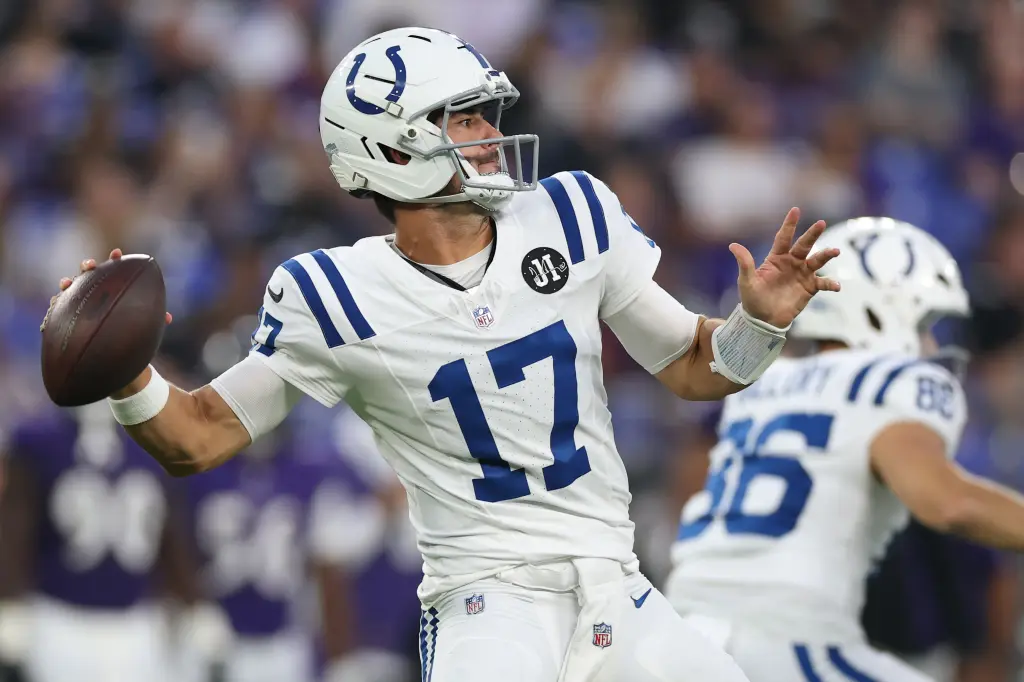
On December 7, 2025, during a seemingly routine play, Daniel Jones suffered a sudden, non-contact injury to his right ankle: a suspected torn Achilles tendon. Reports soon confirmed the worst: the veteran quarterback will miss the rest of the season.
But this dramatic moment on the field didn’t occur in a vacuum. Jones had reportedly been slogging through a fractured left fibula. While the fibula isn’t the main weight-bearing bone in the lower leg, it plays an important role in ankle stability and lower-leg biomechanics.
As an MRI technologist, I can’t help but think about how that left-leg injury might have disrupted his gait — forcing his healthy right leg to overcompensate under repeated load, fatigue, and uneven stress. Over months of playing “on one good leg,” that imbalance could set the stage for a catastrophic overload of the Achilles tendon.
Understanding the Fibula — A “Support” Bone, but Important
The lower leg comprises two long bones: the tibia (main weight bearer) and the fibula (support bone). The fibula carries only a small fraction of the body's load, but contributes to ankle stability and proper force distribution across the leg.
When the fibula is fractured — even if the break is not major or does not require full immobilization — it can still alter biomechanics. A fractured fibula can cause instability, pain, or subtle changes in how an athlete bears weight, moves, or plants the foot.
In a high-impact, dynamic sport like football, where cutting, planting, sprinting, and sudden changes of direction are constant — even slight instability or compensation can lead to overuse or overload injuries elsewhere.
How Compensation Could Lead to Achilles Overload
When one leg is compromised (the left, in Jones' case), the body naturally offloads stress onto the other side. Over time, this may:
Increase repeated micro-trauma to tendons on the “good leg” as it takes more load than usual, especially during high-impact movements.
Alter gait patterns, stride length or foot placement — potentially increasing stress on calf muscles, tendon insertions, and ankle/heel structures.
Cause fatigue in supporting structures (muscles, tendons, ligaments) because they are constantly compensating for the weaker leg.
Given these potential compensation patterns, a well-functioning Achilles on the healthy leg might gradually become vulnerable — especially under NFL-level force, rapid maneuvers, and fatigue.
What the MRI Likely Showed — Inside the Radiology Room
When the medical staff ordered an MRI on Jones’ injured lower leg, here’s what we — as MRI technologists and radiologists — would most expect to see (and what would confirm a full Achilles rupture):
A clear discontinuity in the Achilles tendon fibers: on sagittal MRI slices, instead of a continuous, taut tendon running from calf muscle to heel bone, there would be a visible gap. The two ends of the tendon no longer align.
In the gap: fluid, swelling, and possibly hemorrhage — these show as bright (hyper-intense) signals on fluid-sensitive sequences or T2/PD-weighted images. That bright signal distinguishes a tendon rupture from a simple strain.
Surrounding tissue reaction: calf muscle edema, soft-tissue inflammation around the ankle, possible involvement of adjacent ligaments or tissue — signs that the injury is not isolated to tendon fibers, but affects the soft tissue envelope around the tendon.
Loss of normal tendon architecture: instead of the regular cylindrical tendon shape, the distal segment (near heel) might appear retracted upward; the proximal end may bunch or appear thickened/swollen if inflammation has started.
These imaging findings — paired with the player’s failure to push off, inability to plantar-flex, and classic “pop” sensation — confirm a full Achilles tear. According to classic orthopedic literature, that’s how a complete tendon rupture is diagnosed.
Why Tendon Injuries Lag & Recovery Is So Tough
Unlike bone, a tendon’s healing is slow. Tendons have relatively poor blood supply compared to bone — which makes regeneration and repair difficult.
Even with surgical repair (which for a professional athlete is highly likely), recovery is often measured in months — with careful rehabilitation needed to restore tendon strength, calf-muscle conditioning, ankle stability, and symmetry.
Given his history — including prior injuries and the fibula issue — an Achilles tear represents not just a season-ending injury, but a significant challenge for long-term durability and performance.
What Fans & Athletes Often Don’t See: The Hidden Chain Reaction
A fracture in one bone (fibula) — even when not catastrophic — can ripple through an athlete’s biomechanics, setting up overloads in tendons or joints on the “good” side.
MRI isn’t just a “confirm or deny” test — it’s often the first time you see the true extent of damage: torn fibers, swelling, retraction, soft-tissue involvement. That moment — when the radiology report comes back — often seals the diagnosis before “pop and limp” even tells the whole story.
For professional athletes: playing “through pain” or “playing hurt” can increase the risk of secondary injuries. What starts as a bone break might end as a torn tendon if the body is forced to compensate under high load.
Conclusion: A Reminder of the Price of Performance
Watching a player of Daniel Jones’ caliber collapse on the field is painful for fans. But as someone who spends long hours in MRI suites — aligning slices, fine-tuning coil placement, watching tendon fibers go from “taut and continuous” to “gapped and inflamed” — I know there’s a deeper story behind the headline.
Injuries don’t always happen in isolation. Sometimes they’re a chain reaction: a bone break disrupts balance, compensation leads to overload — and a tendon gives out. MRI doesn’t lie. And when it shows a ruptured Achilles after months of stress and compensation, it’s a stark reminder: even the strongest bodies have limits.
For Daniel: this is more than a missed season. It’s a long, uphill road of healing, rehab, and rebuilding — not just for the body but for trust in that body again.
Here’s hoping for a full recovery — and a return when he’s truly ready.